- Bertrand Russell
Deixo aqui isto, no regresso das férias
”It is possible that mankind is on the threshold of a golden age; but, if so, it will be necessary first to slay the dragon that guards the door, and this dragon is religion.”


Bem visto...
Sinais interiores de riqueza
Estar pessimista, sentir ataques de ansiedade e deixar-se levar pelo pânico por causa das crises no sistema financeiro deste ou daquele país, ou por causa da ameaça de recessão internacional, é um luxo só acessível aos ricos.
(visto @ Aspirina B)
Estar pessimista, sentir ataques de ansiedade e deixar-se levar pelo pânico por causa das crises no sistema financeiro deste ou daquele país, ou por causa da ameaça de recessão internacional, é um luxo só acessível aos ricos.
(visto @ Aspirina B)
A política perversa da crise financeira (Jornal de Negócios)

ECONOMISTAS
A política perversa da crise financeira
08 Agosto 2011 | 11:47
LuigiZingales -
Ao tentar entender o padrão e o momento das intervenções governamentais durante a crise financeira, devemos talvez concluir que, parafraseando o filósofo francês Blaise Pascal, os políticos têm incentivos que a economia não consegue entender.
Do ponto de vista económico, o problema é simples. Quando a solvência soberana se deteriora significativamente, a sua sobrevivência torna-se dependente das expectativas do mercado. Se as expectativas indicarem que a Itália é solvente, os mercados vão emprestar a taxas de juro mais baixas. A Itália vai ser capaz de cumprir as obrigações actuais e muito provavelmente, também, as obrigações futuras. Mas se muitas pessoas começarem a duvidar da solvência do país e a exigir um prémio mais elevado, o défice orçamental do país vai piorar e é provável que a Itália entre em incumprimento.
Se um devedor como a Itália acaba protegido pelas boas expectativas ou cai num pesadelo depende, muitas vezes, de algumas "notícias coordenadas". Se todos esperarem que um corte de "rating" torne a dívida italiana insustentável, a Itália entrará, de facto, em incumprimento após o corte, independentemente dos efeitos deste corte na economia real. Esta é a maldição do que os economistas chamam de "equilíbrio múltiplo": quando espero que os outros comecem a fugir, é óptimo para mim começar também a fugir; mas se todos mantiverem a calma, não tenho incentivos para fazer algo diferente da maioria.
Tendo em conta esta dinâmica económica, parece haver duas receitas políticas óbvias. Em primeiro lugar, é muito perigoso para qualquer país aproximar-se de um ponto em que a insolvência pode facilmente ser desencadeada. Apesar de ninguém conseguir antecipar este ponto, é óbvio quando começam a soar os primeiros sinais de alarme. Dado o enorme custo de um incumprimento, qualquer governo deve ficar afastado da zona de perigo.
A segunda receita assume que se, por alguma razão, algum país acabar por entrar na zona de perigo, só há duas respostas que fazem sentido económico. Ou as autoridades reconhecem imediatamente a inevitabilidade de um incumprimento e não gastam recursos para o evitar, ou acreditam que um incumprimento pode ser evitado e disponibilizam todos os recursos à sua disposição o mais depressa possível. Tal como em muitas guerras, um agravamento numa crise financeira leva muitas vezes ao pior resultado possível: uma derrota com elevados prejuízos.
Essa é, infelizmente, a história da intervenção das autoridades norte-americanas durante a crise financeira de 2008. Após o colapso do Bear Stearns ficou claro que iriam haver mais problemas. Ainda assim, o governo dos Estados Unidos não fez nada. Em Julho de 2008, quando a Fannie Mae e a Freddie Mac foram consideradas insolventes, o Secretário do Tesouro prometeu, então, resolver o problema com uma bazuca mas acabou por resolver o problema apenas com uma bala. Foi só após o colapso do Lehman Brothers que Paulson foi ao Congresso procurar a aprovação de um pacote de 700 mil milhões de dólares para estabilizar o sistema financeiro. Mesmo isso acabou por insuficiente.
A mesma farsa parece estar a ter lugar na Europa. Se as autoridades europeias achavam que a Grécia precisava de ser salva, uma intervenção imediata poderia ter minimizado os recursos necessários. Se pensavam que a Grécia devia entrar em incumprimento, uma decisão nesse sentido tinha também minimizado os custos. Agora estamos no segundo pacote de ajuda e parece não haver fim à vista. Entretanto, a Itália está a afundar-se.
Podemos argumentar que os políticos agiram desta maneira porque não entenderam a natureza económica desta crise. Não concordo. Penso que o que os levou a agir desta maneira não foi falta de conhecimento mas sim incentivos perversos.
Primeiro que tudo, mesmo para alguém com os melhores incentivos, é difícil escolher um custo menor que seja pago já em vez de um custo maior que poderá diminuir no futuro. Para um político eleito que já não estará em funções (ou mesmo vivo) quando os custos mais elevados se materializarem a escolha é óbvia. É por isso que os países acumulam dívidas que os colocam na zona de perigo.
Em segundo, não há nenhuma compensação política de enfrentar uma guerra preventiva. Pelo contrário, agir depois dos problemas terem rebentado gera um enorme capital político. Se Franklin Roosevelt tivesse conseguido evitar o ataque a Pearl Harbor com uma intervenção preventiva contra o Japão, ainda estaríamos a discutir se a guerra com o Japão era evitável. Roosevelt esperou e só agiu após a catástrofe e tem sido considerado um salvador. Para agir os políticos precisam de consensos. Mas estes normalmente só aparecem depois dos custos de não fazer nada serem demasiado visíveis. Nesta altura, é muitas vezes demasiado tarde para evitar o pior resultado.
Estes incentivos estão presentes em todas as democracias. Não podem ser eliminados. Mas podem ser atenuados. O Pacto de Estabilidade e Crescimento da Europa foi um esforço nesse sentido - ao criar incentivos para que os países da Zona Euro se mantivessem afastados da zona de perigo. Infelizmente, o pacto falhou miseravelmente. Mas se queremos que o euro sobreviva - e que outros países evitem crises de dívida soberana - precisamos de regras à prova de políticos.
LuigiZingales -
Ao tentar entender o padrão e o momento das intervenções governamentais durante a crise financeira, devemos talvez concluir que, parafraseando o filósofo francês Blaise Pascal, os políticos têm incentivos que a economia não consegue entender.
Do ponto de vista económico, o problema é simples. Quando a solvência soberana se deteriora significativamente, a sua sobrevivência torna-se dependente das expectativas do mercado. Se as expectativas indicarem que a Itália é solvente, os mercados vão emprestar a taxas de juro mais baixas. A Itália vai ser capaz de cumprir as obrigações actuais e muito provavelmente, também, as obrigações futuras. Mas se muitas pessoas começarem a duvidar da solvência do país e a exigir um prémio mais elevado, o défice orçamental do país vai piorar e é provável que a Itália entre em incumprimento.
Se um devedor como a Itália acaba protegido pelas boas expectativas ou cai num pesadelo depende, muitas vezes, de algumas "notícias coordenadas". Se todos esperarem que um corte de "rating" torne a dívida italiana insustentável, a Itália entrará, de facto, em incumprimento após o corte, independentemente dos efeitos deste corte na economia real. Esta é a maldição do que os economistas chamam de "equilíbrio múltiplo": quando espero que os outros comecem a fugir, é óptimo para mim começar também a fugir; mas se todos mantiverem a calma, não tenho incentivos para fazer algo diferente da maioria.
Tendo em conta esta dinâmica económica, parece haver duas receitas políticas óbvias. Em primeiro lugar, é muito perigoso para qualquer país aproximar-se de um ponto em que a insolvência pode facilmente ser desencadeada. Apesar de ninguém conseguir antecipar este ponto, é óbvio quando começam a soar os primeiros sinais de alarme. Dado o enorme custo de um incumprimento, qualquer governo deve ficar afastado da zona de perigo.
A segunda receita assume que se, por alguma razão, algum país acabar por entrar na zona de perigo, só há duas respostas que fazem sentido económico. Ou as autoridades reconhecem imediatamente a inevitabilidade de um incumprimento e não gastam recursos para o evitar, ou acreditam que um incumprimento pode ser evitado e disponibilizam todos os recursos à sua disposição o mais depressa possível. Tal como em muitas guerras, um agravamento numa crise financeira leva muitas vezes ao pior resultado possível: uma derrota com elevados prejuízos.
Essa é, infelizmente, a história da intervenção das autoridades norte-americanas durante a crise financeira de 2008. Após o colapso do Bear Stearns ficou claro que iriam haver mais problemas. Ainda assim, o governo dos Estados Unidos não fez nada. Em Julho de 2008, quando a Fannie Mae e a Freddie Mac foram consideradas insolventes, o Secretário do Tesouro prometeu, então, resolver o problema com uma bazuca mas acabou por resolver o problema apenas com uma bala. Foi só após o colapso do Lehman Brothers que Paulson foi ao Congresso procurar a aprovação de um pacote de 700 mil milhões de dólares para estabilizar o sistema financeiro. Mesmo isso acabou por insuficiente.
A mesma farsa parece estar a ter lugar na Europa. Se as autoridades europeias achavam que a Grécia precisava de ser salva, uma intervenção imediata poderia ter minimizado os recursos necessários. Se pensavam que a Grécia devia entrar em incumprimento, uma decisão nesse sentido tinha também minimizado os custos. Agora estamos no segundo pacote de ajuda e parece não haver fim à vista. Entretanto, a Itália está a afundar-se.
Podemos argumentar que os políticos agiram desta maneira porque não entenderam a natureza económica desta crise. Não concordo. Penso que o que os levou a agir desta maneira não foi falta de conhecimento mas sim incentivos perversos.
Primeiro que tudo, mesmo para alguém com os melhores incentivos, é difícil escolher um custo menor que seja pago já em vez de um custo maior que poderá diminuir no futuro. Para um político eleito que já não estará em funções (ou mesmo vivo) quando os custos mais elevados se materializarem a escolha é óbvia. É por isso que os países acumulam dívidas que os colocam na zona de perigo.
Em segundo, não há nenhuma compensação política de enfrentar uma guerra preventiva. Pelo contrário, agir depois dos problemas terem rebentado gera um enorme capital político. Se Franklin Roosevelt tivesse conseguido evitar o ataque a Pearl Harbor com uma intervenção preventiva contra o Japão, ainda estaríamos a discutir se a guerra com o Japão era evitável. Roosevelt esperou e só agiu após a catástrofe e tem sido considerado um salvador. Para agir os políticos precisam de consensos. Mas estes normalmente só aparecem depois dos custos de não fazer nada serem demasiado visíveis. Nesta altura, é muitas vezes demasiado tarde para evitar o pior resultado.
Estes incentivos estão presentes em todas as democracias. Não podem ser eliminados. Mas podem ser atenuados. O Pacto de Estabilidade e Crescimento da Europa foi um esforço nesse sentido - ao criar incentivos para que os países da Zona Euro se mantivessem afastados da zona de perigo. Infelizmente, o pacto falhou miseravelmente. Mas se queremos que o euro sobreviva - e que outros países evitem crises de dívida soberana - precisamos de regras à prova de políticos.
Luigi Zingales é professor de empreendedorimo e finanças na Universidade de Chicago e co-autor, com Raghuram G. Rajan, do livro "Saving Capitalism from the Capitalists".
© Project Syndicate, 2011.
www.project-syndicate.org
Tradução: Ana Luísa Marques
www.project-syndicate.org
Tradução: Ana Luísa Marques


A citação relevante do dia
"A disposição para venerar pessoas ricas e poderosas e para desprezar ou negligenciar pessoas pobres e de humilde condição é a maior e mais universal corrupção dos sentimentos morais"
Adam Smith, in The Theory of Moral Sentiments.
Adam Smith, in The Theory of Moral Sentiments.
Tenho dito!
Lorem ipsum dolor sit amet, consectetur adipiscing elit. Aliquam elementum justo et purus laoreet aliquam. In hac habitasse platea dictumst. Suspendisse interdum, magna nec eleifend hendrerit, sapien metus pharetra libero, at mollis quam nisl vitae eros. Phasellus posuere velit eu eros fringilla at placerat ligula malesuada. Proin in urna at mi porta pellentesque adipiscing sed metus. Class aptent taciti sociosqu ad litora torquent per conubia nostra, per inceptos himenaeos. Sed et eros lorem, id porta nisl. Nam sollicitudin, arcu nec ultricies sodales, massa neque tempus mauris, id euismod lacus dui non urna. Cum sociis natoque penatibus et magnis dis parturient montes, nascetur ridiculus mus. Nullam posuere, justo molestie porttitor congue, justo urna euismod sem, id congue nibh leo sed mauris. Aenean pharetra pulvinar adipiscing. Etiam nec semper nunc. In nisi diam, faucibus sit amet dignissim at, porta vitae libero. Morbi ornare risus non ipsum porta at dapibus mauris blandit. Duis pulvinar mauris vel lectus pulvinar faucibus. Nunc nec dolor mi, quis molestie mi.
In elementum pellentesque magna a laoreet. Curabitur nec felis nec tortor pharetra blandit sed id sem. Sed at luctus nunc. Cras commodo nisi vitae urna elementum non dapibus odio eleifend. Sed vel urna sem, id malesuada sapien. Nam facilisis suscipit convallis. Donec dapibus elit sed augue pretium placerat. Lorem ipsum dolor sit amet, consectetur adipiscing elit. Pellentesque habitant morbi tristique senectus et netus et malesuada fames ac turpis egestas. Vestibulum accumsan scelerisque semper.
(lame, I know)
In elementum pellentesque magna a laoreet. Curabitur nec felis nec tortor pharetra blandit sed id sem. Sed at luctus nunc. Cras commodo nisi vitae urna elementum non dapibus odio eleifend. Sed vel urna sem, id malesuada sapien. Nam facilisis suscipit convallis. Donec dapibus elit sed augue pretium placerat. Lorem ipsum dolor sit amet, consectetur adipiscing elit. Pellentesque habitant morbi tristique senectus et netus et malesuada fames ac turpis egestas. Vestibulum accumsan scelerisque semper.
(lame, I know)

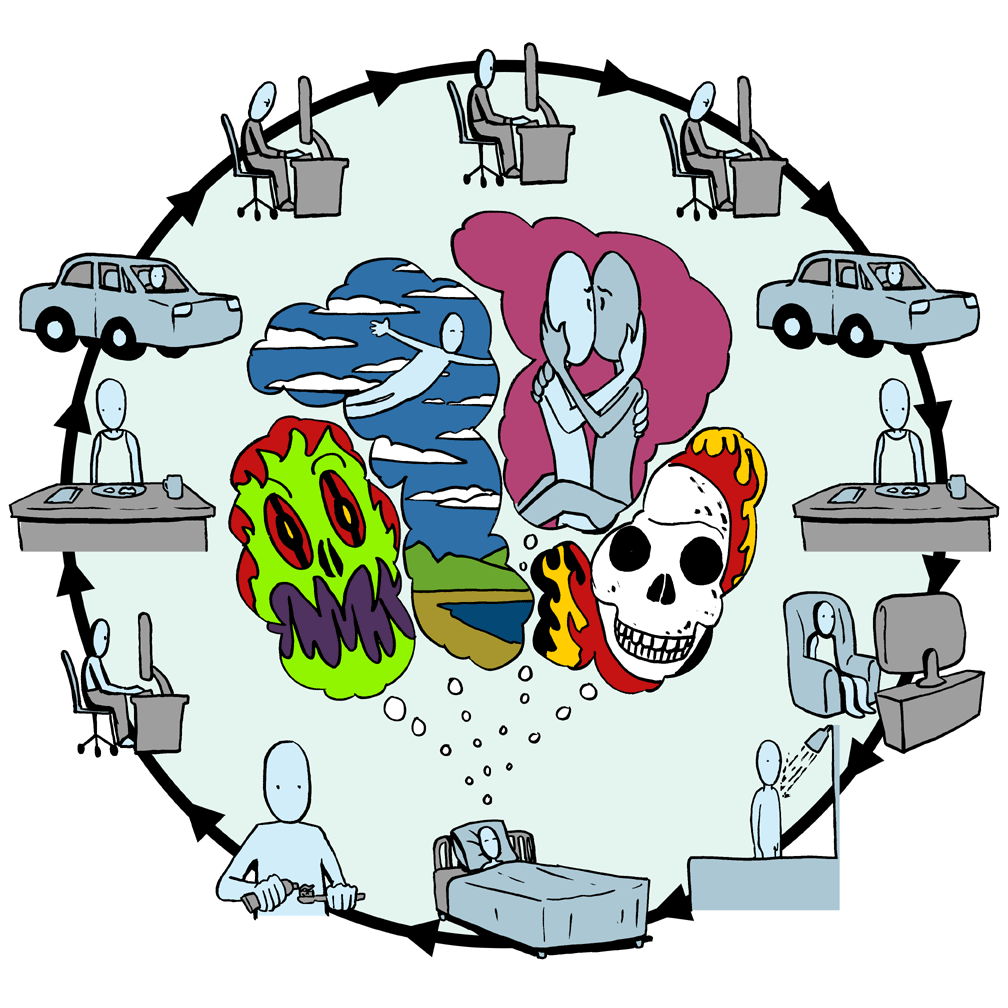
You want to begin again. Pretend you're innocent.
If you believe, you can convince yourself. I'm sure you can convince yourself.
This town never gave you much back. Just rumors and a whispering attack.
This town is not your friend. Never mind the loose ends.
Take me with you when you go now. Don't leave me alone.
I can't live without you. Take me with you, take me with you when you go.
And I don't care about the things I leave at home.
Cause things can't really keep you company when you're alone now.
You want to burn your bridges? I'll help you start the fire.
You want to disappear? I got the manual right here.
You say you want my help? I can't help myself.
You want my help? I can't help myself.
Take me with you when you go now. (take me with you take me with you)
Don't leave me alone. (don't leave me alone)
I can't live without you. Take me with you, take me with you when you go.
Take me with you when you go now. (take me with you take me with you)
Don't leave me alone. (don't leave me alone)
I can't live without you. Take me with you, take me with you when you go. Ahh.
(take me with you take me with you)
You want to begin again. Pretend you're innocent.
If you believe. You can convince yourself, I'm sure.
You can convince yourself.
Take me with you when you go now. (take me with you take me with you)
Don't leave me alone. (don't leave me alone)
I can't live without you. Take me with you, take me with you when you go. Ahh.
Take me with you when you go now
If you believe, you can convince yourself. I'm sure you can convince yourself.
This town never gave you much back. Just rumors and a whispering attack.
This town is not your friend. Never mind the loose ends.
Take me with you when you go now. Don't leave me alone.
I can't live without you. Take me with you, take me with you when you go.
And I don't care about the things I leave at home.
Cause things can't really keep you company when you're alone now.
You want to burn your bridges? I'll help you start the fire.
You want to disappear? I got the manual right here.
You say you want my help? I can't help myself.
You want my help? I can't help myself.
Take me with you when you go now. (take me with you take me with you)
Don't leave me alone. (don't leave me alone)
I can't live without you. Take me with you, take me with you when you go.
Take me with you when you go now. (take me with you take me with you)
Don't leave me alone. (don't leave me alone)
I can't live without you. Take me with you, take me with you when you go. Ahh.
(take me with you take me with you)
You want to begin again. Pretend you're innocent.
If you believe. You can convince yourself, I'm sure.
You can convince yourself.
Take me with you when you go now. (take me with you take me with you)
Don't leave me alone. (don't leave me alone)
I can't live without you. Take me with you, take me with you when you go. Ahh.
Take me with you when you go now

Fantasia erótica estival
Não dá para trabalhar, assim desta maneira, com ela ali em frente,
sentada ou passando diante de mim, fabulosa.
Acresce ao corpo de Deusa, uma simpatia imensa e contagiante com um
sorriso que traz luz à noite mais sombria.
E, por incrível que pareça, é de uma ingenuidade que já não se usa, tem
a inocência da menina que ainda se sente,
Ainda não está maculada pelo cinismo e desespero que nos domina aqui e
em tantos outros lados. Uma preciosidade....
Tento ser discreto no meu fascínio, basbaque, de adolescente carregado
de hormonas, apetece-me tê-la só para mim.
Mas não posso, é fruto proibido, o seu coração tem um dono, que quero
imaginar ser desmerecedor do seu afecto, vil.
Sinto-me como Tântalo, desesperado de sede sem nunca conseguir alcançar
a água, ali tão próxima, que lhe pode tocar.
Bruto e cheio de luxúria, fantasio devassá-la e devorá-la num frenesim
carnal e animal, vezes e vezes sem conta.
Fantasio percorrer o seu corpo tonificado com todos os meus sentidos,
sentir o seu cheiro e o sabor e a textura da sua pele.
Quero ver o fogo e ao ardor seus olhos, na sua face, sentir o cansaço
vitorioso e gracioso do seu corpo, ansioso por mais e mais.
Mas abate-se sobe mim uma profunda tristeza e sinto a impotência e a
futilidade da minha Fantasia, a realidade é fria e desolada.
A minha solidão aumenta quando ela está aqui, em frente, trabalhando
diligentemente, fabulosa...
...e de repente na rádio, uma grande música que me deixou nostálgico
Remar, Remar
Xutos & Pontapés
Mares convulsos, ressacas estranhas
Cruzam-te a alma de verde escuro
As ondas que te empurram
As vagas que te esmagam
Contra tudo lutas
Contra tudo falhas
Todas as tuas explosões
Redundam em silêncio
Nada me diz
Berras às bestas
Que te sufocam
Em abraços viscosos
Cheios de pavor
Esse frio surdo
O frio que te envolve
Nasce na fonte
Na fonte da dor
Remar, remar
Forçar a corrente
Ao mar, ao mar
Que mata a gente
Xutos & Pontapés
Mares convulsos, ressacas estranhas
Cruzam-te a alma de verde escuro
As ondas que te empurram
As vagas que te esmagam
Contra tudo lutas
Contra tudo falhas
Todas as tuas explosões
Redundam em silêncio
Nada me diz
Berras às bestas
Que te sufocam
Em abraços viscosos
Cheios de pavor
Esse frio surdo
O frio que te envolve
Nasce na fonte
Na fonte da dor
Remar, remar
Forçar a corrente
Ao mar, ao mar
Que mata a gente
Influx Capacitor
Eric J. Juneau
Eleven-year-old Martin had nothing to do on his day off from school. So he sat alone in his room, doodling in his diary and watching talk shows, since it was too early for cartoons. The particular topic today was "What would you say if you could go back and tell your fifteen-year-old self one thing?"
Every forty and fifty-year old confessed some regret or mistake. Half of them broke down in tears. One balding, grizzled man even looked like him.
"I wish I knew my future," Martin said to himself. He wrote down If I read this in the future and someone's invented a time machine, I'll be alone on June 22nd, he looked at the clock, 1:45 PM.
*FLASH*
A man with a receding hairline appeared at the foot of his bed, wearing a green-collared shirt and black pants. His arrival was accompanied by a loud whirring noise coming from a black box on his arm. The man had a bigger nose and a saggy face, but Martin knew he was looking at his future self.
"Oh my god, it worked. It worked," the man said as he adjusted his box.
"Jesus," Martin said. "Are you...?"
"I'm you, yes. From the future. You must have just written..." Older Martin pointed to the diary.
"...From a time machine?"
"Yes. I don't have much time. I took a lot of risks to get here."
Martin managed to nod, mouth hanging open.
Older Martin said, "Okay, first thing, ask out Michelle. She really digs you. No matter how scared or shy you are. If you don't, you'll regret it."
"Who's Michelle?"
"College. Freshman year. She lives in Sutherland Dorm. Second, invest in Giga-Write this down!" Older Martin barked.
Young Martin started writing furiously.
"Invest in Gigawire, YorkMark, and Torama."
"Those are companies?"
"Yes, and don't bother buying those collectible comic books. They're worth nothing. And Mom throws them out when you go to college anyway."
"What college do I go to?" Young Martin asked.
"Cantrell. And that's another thing. You've got to get your grades up. In tenth grade, study really hard. I mean it. Maybe you could've gone to a better school if you hadn't gotten angsty and goofed off."
As Martin scribbled, he realized this man, who he would become, wasn't very pleasant.
He continued, "And quit hanging out with those friends by the stairwell all the time. They're losers. They'll just get you into trouble."
*FLASH*
Another man appeared in the room next to older Martin. He wore a shiny blue jumpsuit and looked identical, but with more hair and freckles. "Good," he said, "I'm not too late." He was holding a black device in front of him like bike handlebars.
"Who are you?" Older Martin said.
"I'm you. Well, I'm the you that you become," he pointed at young Martin, "After you're done with your speech. Your temporal bubble must be protecting you from disappearing. Listen," he addressed young Martin, "That thing with Michelle. Don't do it. Or, if you do, wear condoms."
"Condoms?" Green-suited older Martin said, aghast.
"I swear to god, she's crazy. It won't be worth it. And pull your money out of the stock market before the 'Jefferson-Pershing' incident."
Young Martin started writing again at breakneck speed. "What's that?" he said.
"You'll know it when it comes. Also, while I'm at it, don't buy a Honda Gaia. They're terrible."
"Is that a car?" young Martin asked.
"Sort of," blue-suited Martin-of-the-future said.
*FLASH*
Now a man wearing a light periwinkle suit, partially ripped at one sleeve, stood before him. He took his glass helmet off. "Did you just tell him about Michelle?"
Blue-suited Martin nodded, jaw gaping.
"Okay, I don't know how bad she is, but she can't be as bad as Amber."
"Amber?" young Martin and blue-suited Martin said at the same time.
*FLASH*
A Martin wearing a futuristic visor and tight clothes said, "Amber? Try Fred."
"Fred?" All the Martins chorused.
Green-suited Martin said, "I hope that's a nickname."
The older Martins started talking at once, asking questions and demanding to know what had happened that necessitated so many return trips. Young Martin couldn't understand what they were saying.
*FLASH*
A Martin in a pink and gray dress said, "Listen, ignore all these guys. There's something-"
"What's with your clothes?" young Martin said, his tongue out in disgust.
"It's the fashion. Something's going to happen on November 26, 2017. And you can stop it. I've already got a plan for you. Write this down."
*FLASH*
A Martin wearing a tight-fitting white one-piece with rings floating above his head said, "Dude, your plan sucks. You can't-"
*FLASH*
A Martin wearing all black with his hair slicked back said, "Kill them all. Kill everyone in the world. None of them deserve to live."
*FLASH*
A man appeared with a gray cat's head and yellow eyes. A white orb floated between his hands like he was holding it.
"Oh my god," young Martin said, "What-"
"Yes, this is me. There is much to explain. All of the preceding has been irrelevant."
*FLASH*
"Você precisa de compreender. Se você conserva o líder da claque, você excepto o mundo." said the recently arrived Martin with dark skin and a black box around his neck.
"What did he say?" one of the future Martins said.
Now the room was full of Martins, arguing and bickering with each other, pointing fingers, yelling like a U.N. debate. Young Martin covered his ears.
His eye caught the line in his notebook with the date and time. He tore the page out, ripped it up, and threw it away.
All the Martins looked up, startled. In a single bright light, they blinked out of existence.
Martin held his breath. Thirty seconds passed, but nothing happened. When he was sure the quiet had returned, he got up, turned off the TV, and got a soda.
Daqui: http://www.kasmamagazine.com/influx-capacitor.html
Eleven-year-old Martin had nothing to do on his day off from school. So he sat alone in his room, doodling in his diary and watching talk shows, since it was too early for cartoons. The particular topic today was "What would you say if you could go back and tell your fifteen-year-old self one thing?"
Every forty and fifty-year old confessed some regret or mistake. Half of them broke down in tears. One balding, grizzled man even looked like him.
"I wish I knew my future," Martin said to himself. He wrote down If I read this in the future and someone's invented a time machine, I'll be alone on June 22nd, he looked at the clock, 1:45 PM.
*FLASH*
A man with a receding hairline appeared at the foot of his bed, wearing a green-collared shirt and black pants. His arrival was accompanied by a loud whirring noise coming from a black box on his arm. The man had a bigger nose and a saggy face, but Martin knew he was looking at his future self.
"Oh my god, it worked. It worked," the man said as he adjusted his box.
"Jesus," Martin said. "Are you...?"
"I'm you, yes. From the future. You must have just written..." Older Martin pointed to the diary.
"...From a time machine?"
"Yes. I don't have much time. I took a lot of risks to get here."
Martin managed to nod, mouth hanging open.
Older Martin said, "Okay, first thing, ask out Michelle. She really digs you. No matter how scared or shy you are. If you don't, you'll regret it."
"Who's Michelle?"
"College. Freshman year. She lives in Sutherland Dorm. Second, invest in Giga-Write this down!" Older Martin barked.
Young Martin started writing furiously.
"Invest in Gigawire, YorkMark, and Torama."
"Those are companies?"
"Yes, and don't bother buying those collectible comic books. They're worth nothing. And Mom throws them out when you go to college anyway."
"What college do I go to?" Young Martin asked.
"Cantrell. And that's another thing. You've got to get your grades up. In tenth grade, study really hard. I mean it. Maybe you could've gone to a better school if you hadn't gotten angsty and goofed off."
As Martin scribbled, he realized this man, who he would become, wasn't very pleasant.
He continued, "And quit hanging out with those friends by the stairwell all the time. They're losers. They'll just get you into trouble."
*FLASH*
Another man appeared in the room next to older Martin. He wore a shiny blue jumpsuit and looked identical, but with more hair and freckles. "Good," he said, "I'm not too late." He was holding a black device in front of him like bike handlebars.
"Who are you?" Older Martin said.
"I'm you. Well, I'm the you that you become," he pointed at young Martin, "After you're done with your speech. Your temporal bubble must be protecting you from disappearing. Listen," he addressed young Martin, "That thing with Michelle. Don't do it. Or, if you do, wear condoms."
"Condoms?" Green-suited older Martin said, aghast.
"I swear to god, she's crazy. It won't be worth it. And pull your money out of the stock market before the 'Jefferson-Pershing' incident."
Young Martin started writing again at breakneck speed. "What's that?" he said.
"You'll know it when it comes. Also, while I'm at it, don't buy a Honda Gaia. They're terrible."
"Is that a car?" young Martin asked.
"Sort of," blue-suited Martin-of-the-future said.
*FLASH*
Now a man wearing a light periwinkle suit, partially ripped at one sleeve, stood before him. He took his glass helmet off. "Did you just tell him about Michelle?"
Blue-suited Martin nodded, jaw gaping.
"Okay, I don't know how bad she is, but she can't be as bad as Amber."
"Amber?" young Martin and blue-suited Martin said at the same time.
*FLASH*
A Martin wearing a futuristic visor and tight clothes said, "Amber? Try Fred."
"Fred?" All the Martins chorused.
Green-suited Martin said, "I hope that's a nickname."
The older Martins started talking at once, asking questions and demanding to know what had happened that necessitated so many return trips. Young Martin couldn't understand what they were saying.
*FLASH*
A Martin in a pink and gray dress said, "Listen, ignore all these guys. There's something-"
"What's with your clothes?" young Martin said, his tongue out in disgust.
"It's the fashion. Something's going to happen on November 26, 2017. And you can stop it. I've already got a plan for you. Write this down."
*FLASH*
A Martin wearing a tight-fitting white one-piece with rings floating above his head said, "Dude, your plan sucks. You can't-"
*FLASH*
A Martin wearing all black with his hair slicked back said, "Kill them all. Kill everyone in the world. None of them deserve to live."
*FLASH*
A man appeared with a gray cat's head and yellow eyes. A white orb floated between his hands like he was holding it.
"Oh my god," young Martin said, "What-"
"Yes, this is me. There is much to explain. All of the preceding has been irrelevant."
*FLASH*
"Você precisa de compreender. Se você conserva o líder da claque, você excepto o mundo." said the recently arrived Martin with dark skin and a black box around his neck.
"What did he say?" one of the future Martins said.
Now the room was full of Martins, arguing and bickering with each other, pointing fingers, yelling like a U.N. debate. Young Martin covered his ears.
His eye caught the line in his notebook with the date and time. He tore the page out, ripped it up, and threw it away.
All the Martins looked up, startled. In a single bright light, they blinked out of existence.
Martin held his breath. Thirty seconds passed, but nothing happened. When he was sure the quiet had returned, he got up, turned off the TV, and got a soda.
Daqui: http://www.kasmamagazine.com/influx-capacitor.html
Subscrever:
Comentários (Atom)